
When I think of space, I look up and see loads of stars. I see dozens, but I know there are millions. No, billions. I do believe it because books say so. And people who have telescopes say so. Their space is fuller than mine. It feels like it, because I certainly don’t see everything they see. Different things fascinate us. I get lost in time, connecting stars like dots in one of those books from my childhood. If you connected them in the right order, you would get a picture out of it. With stars it’s harder, more advanced. There are no numbers on them and you need good imagination.
Space is. Spaces. Those two sound the same, but are they?
“Space is a continuous area or expanse which is free, available and unoccupied. Spaces are dimensions of height, depth, and width within which all things exist and move”, it says in the dictionary.
 I disagree. Spaces are a matter of discovery. They remain in secrecy unless (not until) we discover them or start to see them as spaces. The word ‘until’ is unsuitable here. Not everybody is eager to discover. You don’t discover some things until you bump into them. Not all spaces can be bumped into. The space which one can see with the help of a telescope is eternal. No width, height or depth of it can be measured. When you fix your look on one particular star, you can’t tell how far away it is until you know its name. You look into the space without knowing how deep you are into it.
What about paper? A piece of paper can be measured, written on, torn, burnt. But what is it if not a virtual reconstruction of paper that I write on right now? I can measure the screen, but I cannot measure the paper until I print it out. How thick or thin is it? I could never tell, even if I looked from the side of my laptop. I can only touch or measure the piece of paper I print these words onto, but what is it I am writing in now? How is it not space? I think the world is too old for such a narrow definition of space(s).
Space is not only width, depth of height. It’s capacity for something. When we say ‘feelings in my heart’, I doubt if anyone sees an actual box in your internal organ that you can measure. It’s a metaphor, but how is heart not a space? It has capacity for feelings. Our minds have capacity too. For thoughts, ideas, stories. For memories that we store or chose to erase. We don’t bump into it, we realise it exists. We find it long after it’s created. When is it though? Do we have any thoughts before we come out of our mother’s womb? Nobody can define when our mind starts ticking like a clock. When does it end? Some writers create stories and essays that are still relevant today, even though they are two or three centuries old. Do our minds die when our body dies?
What is the capacity of human mind? Brain is one thing – it’s a physical object. Some of us have them bigger, others smaller, or at least we think so. Einstein’s brains were smaller than average but he was smarter than many. Mind is on one hand tied very closely to brain, but, on the other hand, it exists on its own. It’s another thing, they’re incomparable. We can’t measure the mind. It’s abstract. Definition of ‘space’ can only be used when it comes to the skull where the brain lies, but how is our mind not a space?
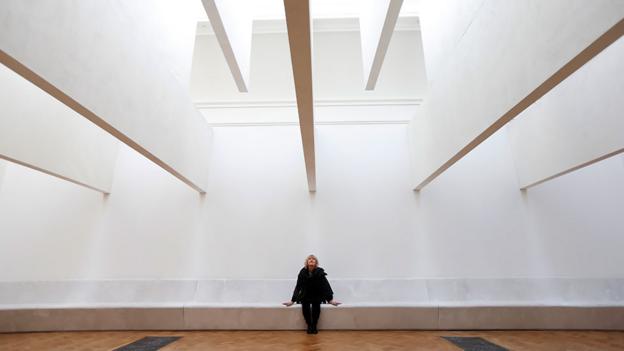
We all discover our spaces. Just like people who love watching stars, we “construct” more and more powerful telescopes to see deeper and deeper into our spaces. We free ourselves from seeing only physical objects. We discover new dimensions and that we lived all our lives in. Our minds become our resort. And when we have no capacity left for our feelings, we cry. Out of misery, or happiness, or memories, or grief, or guilt.
We pile things up all the time. People fill their houses with old things they want to keep forever – old shoes they love too much to get rid of, clothes they “might use someday”. But physical space is limited. Let’s take wanderers as an example.
I have been thinking about this for a while and yes, my conclusion is that people who wander are not always lost. There are so many controversies in their lives, so much chaos and movement, spiced with risk, instability, and longing that it seems to be the best condition to get to know oneself in all ways possible. Even though there is no way this lifestyle is suitable for anyone or attractive for everyone who sticks to it, this is the right path with self-omniscience waiting at its end.
The main reason why I think so is very practical. I am not talking about a person who walks around with a wooden walking-stick and gives strangers advice, even though they were also considered more knowledgeable and experienced than the sedentary ones. Here I am referring to travelers without permanent accommodation, such as international students, couch-surfers, au pair nannies, etc. So, when 'the sedentary ones' move out, it becomes an event of a decade. Collecting their stuff, putting it into boxes and getting rid of some of it becomes a burden, because that 'stuff'' turns out to be the result of years and years of piling it up, filling up the space, even without realizing it. A notion of space emerges.

A modern wanderer cannot afford this luxury. In this case, moving out becomes an annual, seasonal(?), once-in-a-term, or any other kind of periodical thing. It becomes a well-practiced skill. But the hard thing is, we can never help buying new things, and we are given things all the time as well. So, the so-called modern wanderer usually encounters the dilemma I will refer to as 'space/value judgement'. Every time he/she moves out, some things have to be refused. One cannot afford to pile up, or to store things somewhere. And if the space is limited, judgment upon personal value has to be performed. Even very precious things have to be rid of sometimes. When a person goes through it again and again, it becomes a lesson for life. What it teaches, however, it not only the 'proficiency' in moving out.
It is, most importantly, self-exploration. Every time you move out, you see how you have changed. Under the light of cardinal changes, some things suddenly seem needless, and new valuables emerge. And this, being so material (we often think the big self-discoveries are made within oneself), becomes a way to know what's happening even before you find the changes within your inner self.
Wanderers, for example, students who move flats every semester, can’t afford the luxury of piling things up. You have to keep it consistent, because your piece of luggage is a space too. It has the three dimensions you have to deal with upon every move. Every new thing you buy makes you get rid of an old one. If you have your priorities sorted, it is not a burden at all. You understand that there are spaces you don’t have to fill up. Life is a dance floor.
What do I call a space? What do others call a space? Are they different or the same? When I feel happy or sad or guilty, I sometimes wonder if others’ feelings feel the same. I wonder if everyone can feel as intensely as me. But there’s no way to find out. Not with technology and not even with human communication.
So, if a piece of paper is a space, how can I fill it? I can write or draw on it, poke holes in it, burn it, tear it apart. I can write in small or capital letters, make spaces between words big or small. What about children? They might draw a single line with a colorful pen. Or they might draw something and then explain what it is they have drawn. They might as well just leave the piece of paper as it is – empty. What would a teenage do with that piece? Maybe he or she would turn it into a diary, or draw something as well. Do they realize a piece of paper is a space? At what point of life does this realization sink in? Are there many spaces I do not view as spaces yet? Some people can turn paper into music. They write notes on paper and you can hear the melody if you can read them. Is music a space? I don’t think so.
But silence is.

We try to fill it with words or any other sounds we can make. Some of us more, some less. Latino people speak way more than northern, Scandinavian people. Lithuanians are in the middle. Is silence a space of different sizes for each of us? In some conversations people feel desperate need to fill the silence, but in others it’s the opposite – no words are needed. The latter usually happens when people know each other well. In this case it might be that their spaces collide. You don’t feel uncomfortable when your beloved one crosses the line to your comfort zone. You worry when it’s an unfamiliar person who does that. You feel the need to distract yourself and so you begin to talk to them.
In my life I have discovered quite a few spaces. I saw a piece of paper as a space and I wanted to fill it with words. When my mind was too full of emotions, I discovered that tears made me feel lighter. I filled the space in my heart with feelings and found it was hard to control them. Love could make me feel better that all of my thoughts combined, but sadness and guilt burnt me from within. The older I get, the more doubtful I become about ever learning to control my heart.
My mind is a space that gets fuller as I grow and learn. All of my best memories are stored right there. There are some memories I want to forget. As they pop into my head, I want to cover my face with my hand and wake up from this dream. But that’s not what it is. I want to erase some of my memories, but they keep coming back. Can we ever gain total control of our abstract spaces?
As people mature and become more experienced, they learn to fill in spaces more and more professionally. Incomprehensible lines on a sheet of paper become artworks. Lines and lines of long-perfected handwritten letters in primary school notebooks become blogs, diaries, books. The list of feelings expands. We discover them, too. I always loved my mother, but when I said “I love you” to her for the first time in my teens, I discovered it was the feeling I was craving. I cried as a baby, I cried because it hurt physically, but when I cried for the first time out of sadness and stress, I discovered that there was limited space in me for these feelings.
As we become more experienced, we learn to fill our spaces in different ways. Even human history doesn’t hold the answer to how I should be filling up my spaces in a decade or two. I might have a family by then, so new errands and problems will emerge. Will I cry out of happiness or sadness more often? Will I discover more spaces in or around me? These questions are yet to be answered. I can’t wait to see what the future holds.
However, even though we’ve all seen space with our own eyes, there are people who’ve been there. This abstract space we see has become a physical space for some. Realizing the concept of space itself, the depth, length and width of it, can be overwhelming. But placing a tiny human being in there – it sounds surreal. And yet it becomes reality for those who don’t let their hands down.

